Jul.15,2026
Share:
Padel court construction is a structured process that moves through site assessment, foundation work, enclosure installation, turf laying, and lighting setup, and typically takes four to eight weeks once permits and materials are in place. A single outdoor court usually costs between $20,000 and $65,000 depending on enclosure height, glass thickness, turf quality, and lighting specification, while indoor or panoramic builds run higher. For clubs, hotels, and property developers evaluating a padel investment, understanding these steps and cost drivers upfront is the difference between a court that performs for a decade and one that needs early repairs.
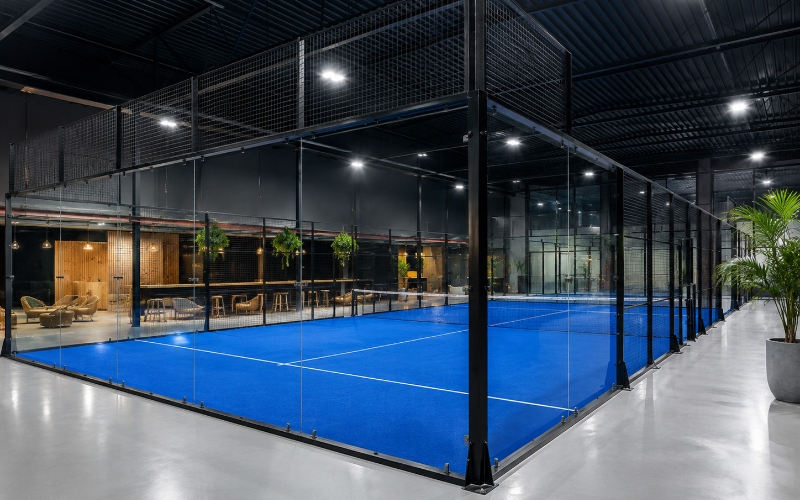
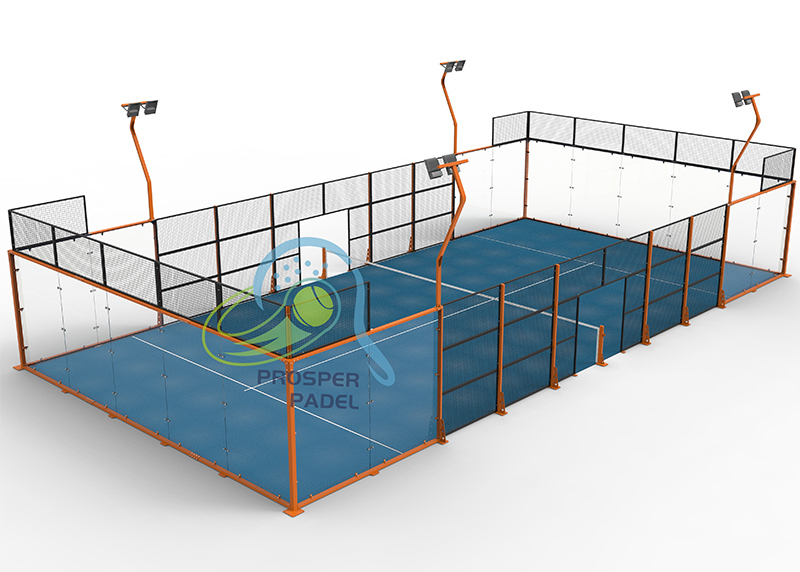
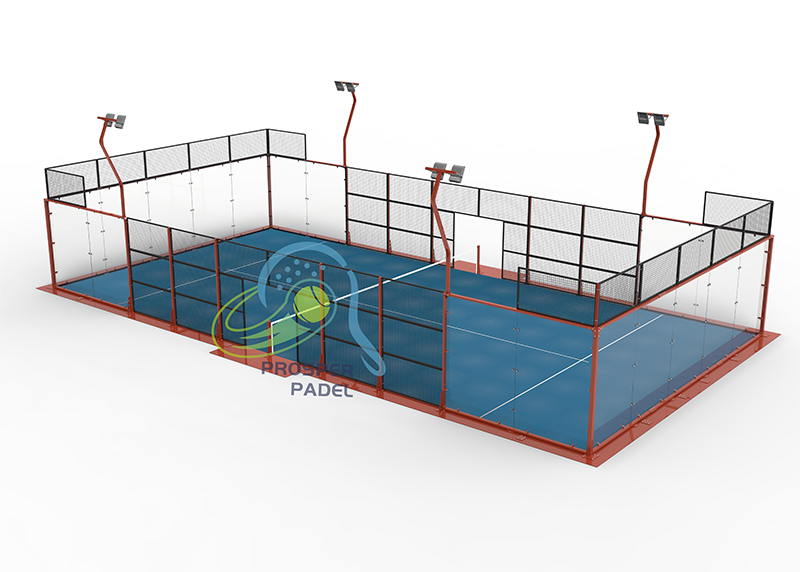
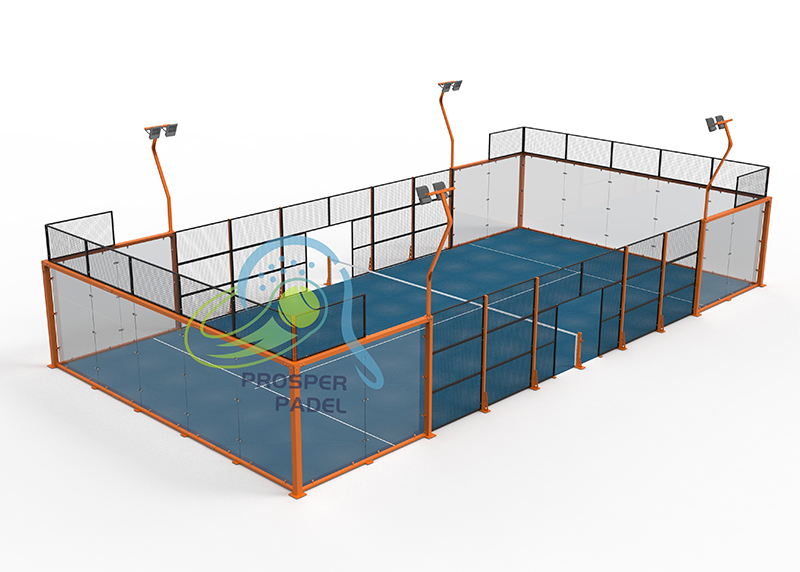
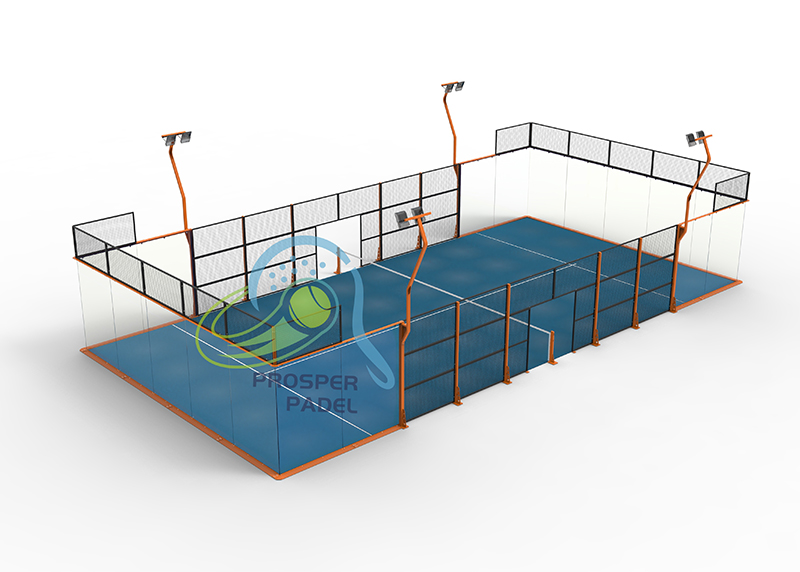
A padel court is an enclosed playing surface built from a steel or aluminum frame, tempered glass panels, galvanized metal mesh, and an artificial turf system laid over a reinforced base. Unlike a simple outdoor court marking, padel construction is closer to building a piece of permanent sports infrastructure: it carries structural loads, needs proper drainage, and must meet International Padel Federation (FIP) specifications if the facility intends to host club-level or competitive play.
For commercial buyers — sports clubs, resorts, real estate developers, and community facilities — this matters because the enclosure and foundation choices made at the start of the project determine long-term maintenance costs, player safety, and how the court performs under daily use. Getting the construction sequence right the first time avoids costly rework later.
Before construction begins, the site needs to accommodate more than just the playing area. FIP regulation courts measure 20 meters long by 10 meters wide, but the surrounding footprint must be larger to allow for safety buffers, access gates, and lighting columns.
These figures form the baseline for any padel court construction plan, whether you're building a single court or a multi-court facility. Sites with irregular grading, poor drainage, or nearby noise-sensitive neighbors may need additional engineering before construction can proceed.
Most padel court construction projects follow the same general sequence, regardless of location or court type:
1.Site survey and design – Confirm orientation (courts are ideally aligned north-south to reduce sun glare), soil conditions, and access for construction equipment.
2.Excavation and foundation – The area is cleared, leveled, and a reinforced concrete slab or porous sub-base is poured, depending on drainage requirements.
3.Steel or aluminum frame erection – The structural frame that will support the glass and mesh panels is anchored to the foundation.
4.Glass and mesh installation – Tempered safety glass (typically 10–12mm) and galvanized mesh panels are fitted, with flush transitions to keep ball rebound consistent.
5.Artificial turf installation – Turf is laid over the base, seams are secured, and silica sand infill is applied and brushed for even traction.
6.Lighting, net, and finishing touches – LED fixtures, net posts, the net itself, and any signage or accessories are installed and tested.
Each stage depends on the one before it, so sequencing errors — like installing turf before the enclosure is fully sealed — can add weeks to a project and increase costs.
Material selection is where padel court construction budgets diverge the most. Buyers evaluating suppliers should look closely at:
Facilities that plan to run high court utilization — hotels, clubs, and multi-court centers — generally benefit from investing in higher-spec materials upfront, since replacement and downtime cost more than the initial premium. This is an area where working with an experienced manufacturer, such as Prosper Padel, helps buyers avoid mismatched components that compromise ball rebound or safety certification later.
Padel court construction costs vary widely based on location, enclosure type, and material grade. The table below breaks down the main cost drivers commercial buyers should budget for.
| Cost Factor | Typical Range (USD) | What Drives the Price |
|---|---|---|
| Foundation and site prep | $3,000 – $10,000 | Soil condition, drainage needs, access for equipment |
| Enclosure (glass + mesh) | $10,000 – $25,000 | Glass thickness, wall height, steel vs. aluminum frame |
| Artificial turf system | $4,000 – $9,000 | Turf grade, pile height, sand infill quality |
| LED lighting | $2,000 – $6,000 | Lux level required, number of poles, fixture quality |
| Net, posts, and accessories | $1,000 – $3,000 | Material grade, tensioning system |
| Indoor / panoramic upgrade | +$15,000 – $40,000 | Roofing, climate control, taller enclosure |
Beyond materials, location-based labor costs, import duties on structural components, and optional features like seating, storage, or spectator areas all shift the final number. Multi-court facilities typically see a lower per-court cost due to shared site work and bulk material pricing — a factor worth discussing with your supplier early in the planning stage.
Because padel court construction combines structural engineering, glazing, and sports surfacing, most commercial buyers work with a specialized manufacturer rather than a general contractor. When evaluating suppliers, it helps to compare:
Keeping up with construction trends and completed projects can also help buyers benchmark realistic timelines and pricing.
Padel court construction rewards careful planning: getting the dimensions, foundation, enclosure materials, and lighting specification right from the start protects both player safety and your long-term investment. Whether you're adding a single court to an existing facility or planning a multi-court development, matching your budget to the right combination of materials — rather than cutting costs on the enclosure or turf — is what separates a court that performs for years from one that needs early rework. For a closer look at available configurations and finishes, get in touch with our team to discuss your project's specifications and timeline.
A single outdoor court typically takes four to eight weeks from groundbreaking to completion, assuming permits are already approved. Indoor or panoramic courts with roofing take longer.
The playing area is 20m x 10m, but the recommended total site footprint is at least 23m x 13m to allow for safety zones, gates, and lighting columns.
In most regions, yes — particularly because of enclosure height, floodlighting, and potential noise impact on neighboring properties. Requirements vary by municipality, so early consultation with local authorities is recommended.
Indoor and panoramic courts generally cost 30–60% more than standard outdoor builds due to roofing, taller structures, and in some cases climate control.
Yes, in some cases the slab and location can be reused, but the enclosure, turf, and net system still need to be built to padel specifications, so cost savings are usually limited to site prep.
Click To Get Your Exclusive Plan
Tianjin Juzhixin Sports Technology Co., Ltd is an innovative sports technology and import and export sales enterprise based in Tianjin and radiating its business worldwide. It is dedicated to empowering the development of the sports industry with technology
Contact Us
HOT Products
+86 189 2070 7687
Huamao Building, Binhai New Area, Tianjin
Copyright @ Tianjin Juzhixin Sports Technology Co., Ltd All Rights Reserved | Sitemap
| Powered by