Aug.11,2026
Share:
A turnkey padel court solution for sports clubs brings the key stages of a padel project together under one coordinated process—from initial site planning and court configuration to manufacturing, delivery, installation, and final handover. For a sports club, this approach is particularly useful because building a successful padel facility involves much more than purchasing a steel frame, glass panels, and artificial turf.
The court has to work within the club’s available space, operating model, spectator requirements, circulation routes, lighting conditions, maintenance plan, and possible future expansion.
That is why the best turnkey solution should begin with the club itself, not simply with a court model.
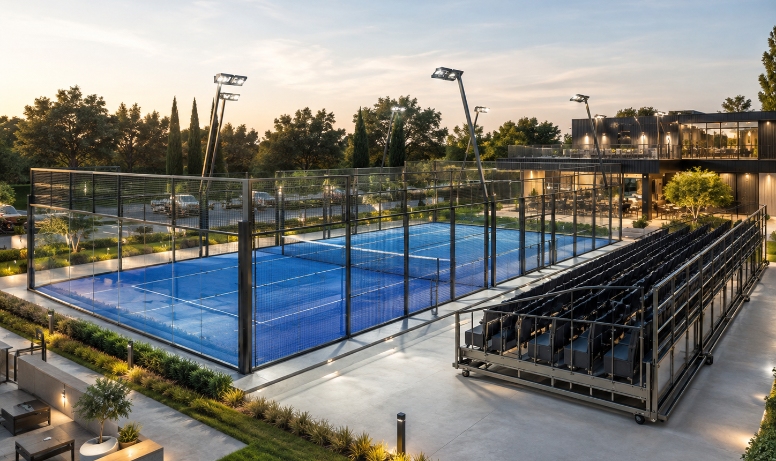
A turnkey solution is intended to reduce the number of disconnected suppliers and decisions a club needs to manage.
Instead of purchasing the court structure from one company, arranging components separately, solving installation issues later, and then looking for additional venue equipment, the project is planned as an integrated facility.
For most sports clubs, the scope can be divided into the following stages:
| Project Stage | Main Considerations |
|---|---|
| Site planning | Available area, court quantity, indoor/outdoor use, access and circulation |
| Court design | Structure, glass, fencing, turf, lighting and entrances |
| Customization | Colors, branding, lighting poles and venue appearance |
| Supporting facilities | Spectator areas, seating, walkways and operational space |
| Manufacturing | Component production, fitting and quality control |
| Logistics | Packaging, transport and installation coordination |
| Installation | Court assembly, turf, glass, lighting and accessories |
| Handover | Inspection, adjustment, documentation and after-sales support |
The important point is not whether every supplier uses exactly the same definition of “turnkey.” The club should confirm what is actually included in the quotation and where the supplier’s responsibility ends.
One of the most common mistakes in a padel project is selecting a court before fully studying how it fits into the venue.
A standard padel court itself occupies a defined playing area—JUZHIXIN’s standard mobile court specification, for example, uses a 20 × 10 m court size—but the usable project footprint is larger once entrances, circulation, spectator zones, maintenance access and surrounding facilities are considered.
Before deciding how many courts to purchase, a sports club should therefore evaluate:
For an existing tennis, fitness or multi-sport club, the question is often not simply “How many padel courts can fit here?” but “How many courts can operate efficiently here?”
Trying to maximize court numbers without leaving enough operational space can make the completed facility inconvenient for players and staff.
Once the site layout is established, the club can determine which type of court is appropriate.
Not every sports club needs the same solution.
A commercial padel club that regularly hosts competitions may prioritize visibility and spectator experience. A fitness club adding padel as an additional activity may place more importance on efficient use of existing space. A temporary venue or property with uncertain long-term use may need a structure that can later be relocated.
Typical choices include traditional framed courts, panoramic courts, full or super panoramic designs, and mobile or detachable configurations.
The selection affects more than appearance. It can influence:
For clubs planning televised matches, tournaments or strong spectator participation, panoramic designs may provide a cleaner viewing environment. For facilities where flexibility is more important, modular or mobile designs deserve greater attention.
Some mobile padel court systems, for example, are designed so that major components can be dismantled, transported and reassembled instead of being treated as a permanently fixed installation.
That can be valuable for rented properties, temporary sports projects, exhibitions or clubs whose long-term site strategy may change.
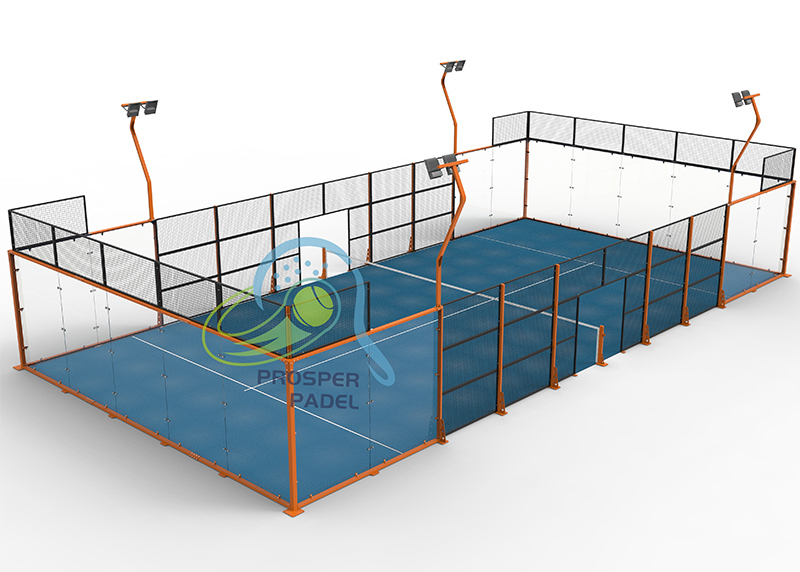
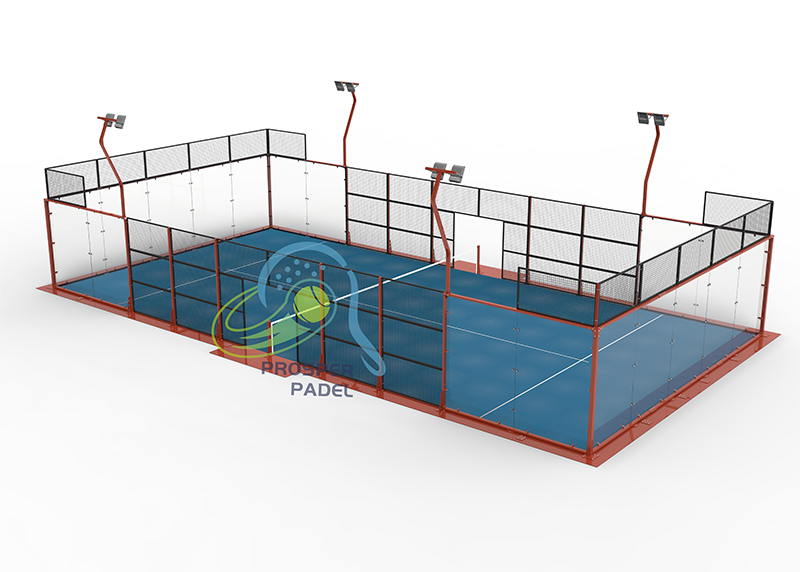
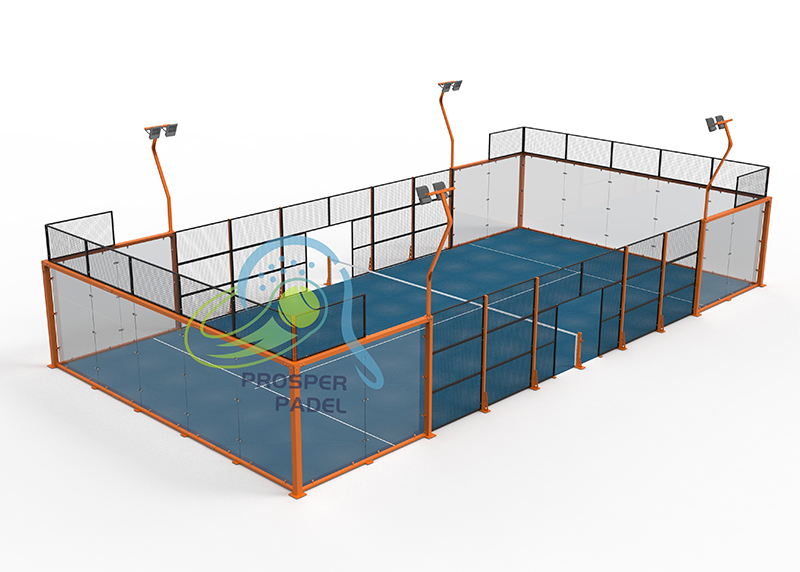
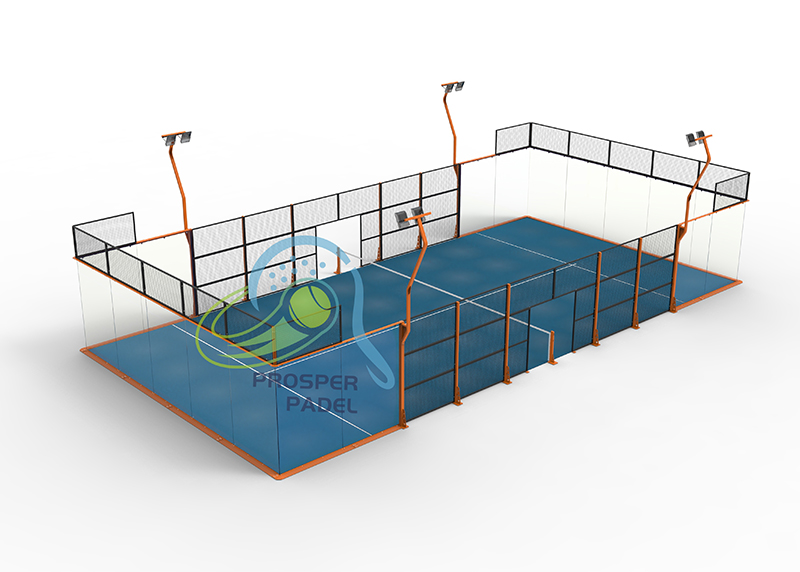
A padel court is not one component. Its performance depends on several systems working together.
The steel frame provides the structural support for the glass, mesh fencing, lighting and other court components.
The appropriate structure should be selected according to the installation environment, expected use and local project requirements. For outdoor projects especially, corrosion protection and environmental exposure should be considered during specification.
Glass is part of the playing enclosure, not simply an architectural feature.
Panel specification, installation accuracy and structural support therefore matter both for player use and long-term reliability.
The fencing forms another playable section of the enclosure. The frame and mesh must remain properly aligned and securely integrated with the overall structure.
Sports clubs should consider turf based on playing performance, usage intensity, maintenance requirements and visual design rather than choosing purely by color.
For commercial facilities, the surface will receive substantially more repeated use than a private court, so long-term maintenance should be considered from the beginning.
Lighting should also be included during initial planning instead of being added after the court has already been installed.
Pole position, fixture arrangement, surrounding buildings and the intended operating schedule can all affect the lighting plan.
For a club operating into the evening, lighting is part of the commercial usability of the facility, not simply an accessory.
Sports clubs often focus heavily on player capacity when planning a new padel area. Spectator capacity is considered later.
That can be a missed opportunity.
Even clubs that mainly operate through hourly court bookings may eventually organize:
Permanent grandstands are suitable for some locations, but they also dedicate a fixed portion of the venue to seating even when no spectators are present.
For a multi-purpose sports club, movable or retractable seating can provide a more flexible alternative.
The seating can be deployed when a tournament or event requires additional spectator capacity and retracted or relocated when the same space is needed for training, circulation or another activity.
This means spectator infrastructure becomes part of the club's flexible space strategy rather than a permanently occupied area.
Customization is most useful when it supports the club's identity or operating requirements rather than adding decorative features without a purpose.
Within its one-stop sports venue solution, JUZHIXIN SPORTS supports customization of elements including steel-structure colors, artificial-turf colors, different lamp-post forms, branding and protective-case logos. More importantly for sports clubs, the solution can also incorporate customized mobile and retractable grandstand seating. The seating system can be configured according to venue dimensions and tier requirements, with options for seat and frame colors and club branding; selected retractable systems are available with manual or electric operation.
This last option is particularly relevant for clubs that want one area to serve different purposes during the week.
Instead of designing the padel zone only around permanent spectator infrastructure, the club can create an adaptable layout: open space during normal training and daily bookings, then additional seating capacity for competitions or special events.
That is a meaningful difference between supplying a padel court product and planning a sports venue solution.
Once drawings and specifications are confirmed, the project moves into manufacturing.
At this stage, good coordination can prevent problems during installation.
The supplier and club should confirm details such as:
For an international project, logistics should also be considered during production rather than after manufacturing is complete.
Court components include long steel sections, glass, turf, lighting equipment and multiple accessories. Correct identification and packaging make on-site assembly easier and reduce the risk of components being misplaced or damaged in transit.
This is another reason why a turnkey approach can simplify a club project: design decisions, production information and installation requirements remain connected.
Even a well-manufactured padel court cannot compensate for poor site preparation.
Before the court arrives, the club should ensure that the installation area and supporting infrastructure meet the agreed project requirements.
The exact construction scope will depend on the project, but coordination may involve:
ground or slab preparation → drainage → electrical preparation → court structure → glass and fencing → lighting → turf → net and accessories → inspection
The club should know clearly which work is included in the supplier's scope and which local work must be completed separately.
This distinction becomes particularly important for overseas turnkey projects, where civil construction may be carried out by a local contractor while the padel supplier provides drawings, equipment and installation guidance.
Clear responsibility is more valuable than a vague promise that “everything is included.”
Final handover should be treated as a separate stage rather than simply the day installation finishes.
Before opening the court to members, the club should inspect the completed facility systematically.
Typical checks should cover structural connections, glass installation, turf condition, fencing, doors, net system, lighting, accessories and the general condition of the surrounding area.
Operational staff should also understand the basic maintenance requirements of the facility.
For sports clubs running multiple courts, a simple inspection and maintenance schedule can make routine management easier and help identify small issues before they become larger repairs.
This distinction is important.
A turnkey padel court should not mean that every club receives the same package.
A four-court commercial padel center, an existing tennis club adding two courts, a rooftop sports facility and a multi-purpose indoor club may all need very different configurations.
The real advantage of turnkey delivery is coordination, not standardization.
The supplier should be able to take the club's site conditions and operating plan and convert them into a practical combination of court type, materials, customization, supporting infrastructure, installation requirements and project sequencing.
Before signing a contract, club owners and project managers should clarify several practical questions:
A turnkey padel court solution coordinates the main stages required to move from a planned court project to an operational facility. Depending on the supplier and contract, this can include site planning, court design, manufacturing, customization, logistics, installation support and final handover.
Yes. It can be particularly useful for existing tennis clubs, fitness centers and multi-sport venues because the project can be planned around existing buildings, circulation routes, available land and other sports facilities.
Yes. Depending on the court system, customization may include steel colors, turf colors, logos, protective elements and other visual components. The key is to coordinate branding during the design stage rather than adding it after production.
Not necessarily. Clubs that regularly host large competitions may prefer permanent seating, while multi-purpose facilities can benefit from mobile or retractable seating that can be deployed for events and stored or moved when additional floor space is required.
Some padel court systems are specifically designed with modular or mobile structures that allow dismantling and reassembly. This can be useful for temporary venues, leased sites and clubs that may need to relocate facilities later.
A successful turnkey padel court solution for sports clubs should do more than deliver the basic components required to play padel.
It should connect the court with the way the club will actually operate.
That means considering the site before selecting the court, planning player and spectator movement, coordinating structures, turf and lighting, preparing for installation, and thinking about how the facility may be used several years from now.
For clubs that host both everyday bookings and occasional competitions or events, flexibility becomes especially valuable. Modular court systems and movable spectator seating can allow the same venue to adapt as programming, membership and commercial opportunities change.
The result is not simply a completed padel court.
It is a sports facility designed to work from opening day—and continue working as the club develops.
Click To Get Your Exclusive Plan
Tianjin Juzhixin Sports Technology Co., Ltd is an innovative sports technology and import and export sales enterprise based in Tianjin and radiating its business worldwide. It is dedicated to empowering the development of the sports industry with technology
Contact Us
HOT Products

+86 189 2070 7687
Huamao Building, Binhai New Area, Tianjin
Copyright @ Tianjin Juzhixin Sports Technology Co., Ltd All Rights Reserved | Sitemap
| Powered by