Sep.20,2026
Share:
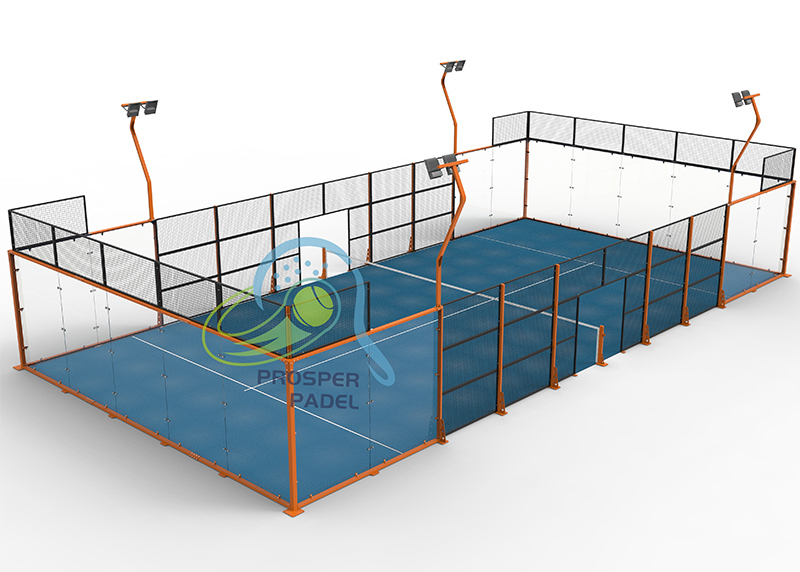
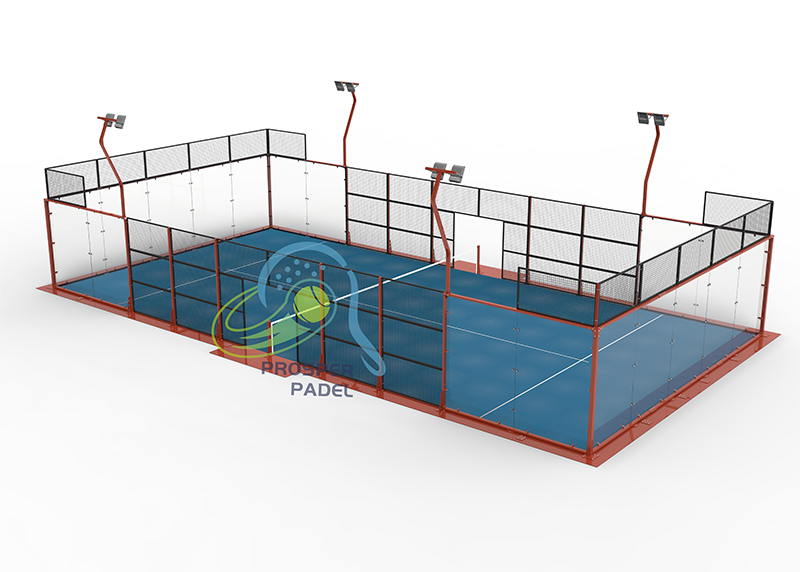
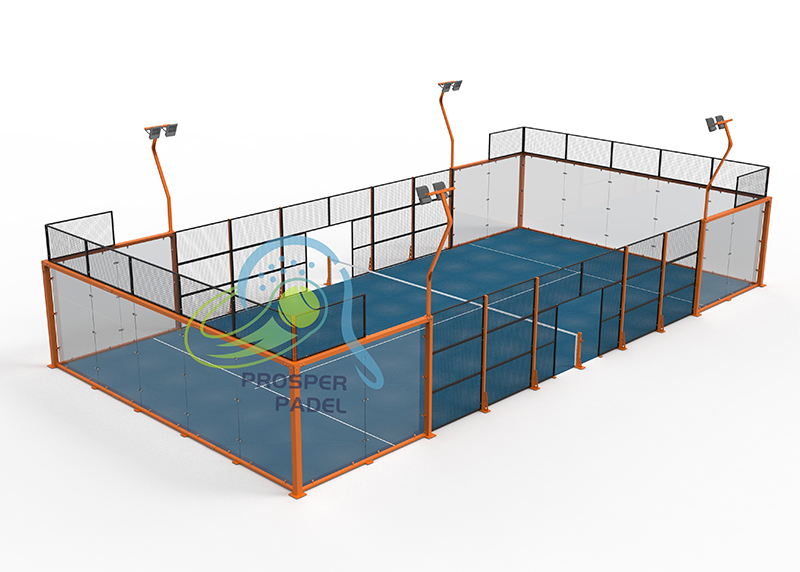
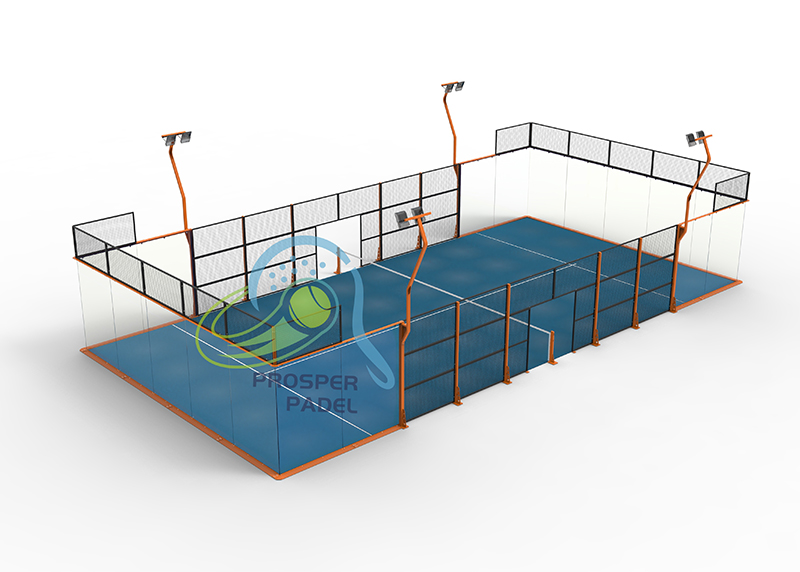
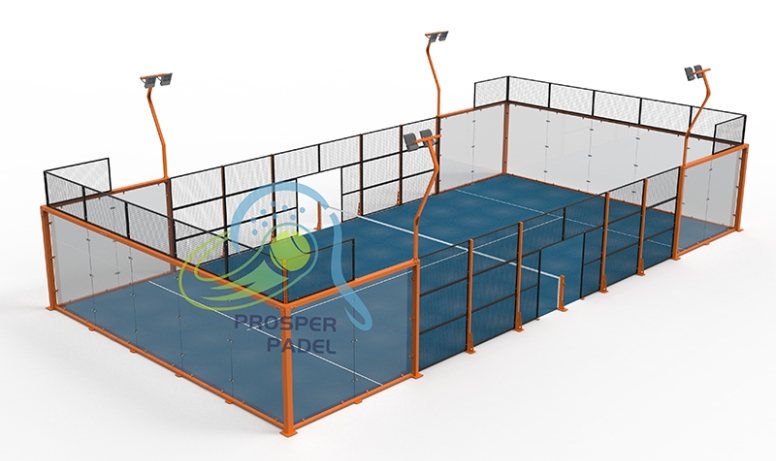
Choosing a panoramic padel court manufacturer involves more than comparing product photos and prices. A panoramic court uses large glass areas and reduced structural obstruction to create better spectator visibility, which means its steel frame, glass support, connections, foundations and installation accuracy all need to work as one system.
For commercial clubs, resorts, sports complexes and padel investors, the manufacturer also influences much more than the court itself. Production consistency, packaging, international shipping, installation documentation and replacement-part support can all affect whether a project opens on schedule and performs reliably after installation.
So, before requesting quotations from several suppliers, what should you actually compare?
| Area to Check | What Buyers Should Ask |
|---|---|
| Manufacturing | Does the company manufacture the main structural components itself? |
| Structural design | Can it provide drawings, profile dimensions and connection details? |
| Glass | What type, thickness and processing specification is supplied? |
| Steel | What profiles, wall thickness and surface treatment are used? |
| Outdoor engineering | Can the structure be adapted to local wind and climate conditions? |
| Customization | Can the court be configured for the actual venue rather than only sold as a fixed package? |
| Quality control | How are steel, glass, coating and finished components inspected? |
| Installation | Are foundation drawings, assembly drawings and technical support included? |
| Packaging | How are glass and structural components protected and identified for export? |
| Logistics | Can the supplier coordinate international container shipping? |
| Project experience | Can it show completed projects relevant to your venue type or climate? |
| After-sales | Are spare parts and replacement components available? |
A good supplier should be able to answer these questions with specifications, drawings and project information—not just marketing claims.
Before comparing manufacturers, define what the court actually needs to do.
A panoramic padel court for an indoor training club does not have the same requirements as a beachfront resort, rooftop facility or exposed outdoor sports center.
Provide suppliers with basic project information such as:
project country and city;
indoor or outdoor installation;
number of courts;
single- or multi-court layout;
available site dimensions;
intended commercial use;
expected spectator requirements;
local climate;
roof or canopy requirements;
branding requirements.
This allows the manufacturer to recommend a structure based on the venue rather than simply quoting the model it sells most often.
It also makes quotations easier to compare because every supplier is responding to the same project conditions.
A panoramic padel court contains several systems:
steel structure + tempered glass + mesh + artificial turf + lighting + net system + hardware
Not every supplier controls these components to the same extent.
When evaluating a manufacturer, ask which parts are produced in-house and which are outsourced.
This matters particularly for structural components.
If columns, beams and mesh sections are produced under one manufacturing system, dimensions, hole positions, welding and coating can be controlled more consistently.
Juzhixin, for example, states that the columns, beams and netting for its Full Panoramic JZX-10 are produced in-house, allowing production scheduling and structural quality to be controlled directly.
For buyers, useful evidence of manufacturing capability can include:
production-line photos or videos;
welding facilities;
steel cutting and drilling equipment;
coating processes;
assembly inspection;
glass packaging areas;
factory quality-control procedures.
A factory visit or live video inspection can be useful for larger orders.
One of the biggest mistakes when sourcing a panoramic court is choosing by appearance alone.
A rendering shows how the finished court looks.
It does not show how the structure carries load.
Panoramic padel courts reduce or reposition some of the structural posts found on conventional padel courts. This creates cleaner sightlines, but the loads still need to pass through the remaining beams, columns, connections and foundations.
Ask the manufacturer for drawings showing:
steel-column locations;
beam configuration;
profile dimensions;
wall thickness;
base plates;
anchor locations;
glass arrangement;
door positions;
lighting supports.
This is especially important when comparing Full Panoramic, Pro Panoramic and Super Panoramic designs.
Those names are commonly used as commercial product descriptions rather than universal structural classifications. Two manufacturers may use the same name for noticeably different frames.
Compare the actual structure—not the model name.
A visually attractive court still needs to function correctly as a padel court.
The International Padel Federation specifies an internal doubles playing area of 20 × 10 meters, together with requirements for the surrounding enclosure. FIP rules also state that glass court walls must comply with the applicable tempered/plate glass requirements.
Before ordering, confirm:
internal playing dimensions;
enclosure configuration;
net position;
access points;
glass layout;
fencing dimensions;
lighting location.
If the venue is intended for official competition or a specific national federation, tell the manufacturer at the quotation stage because additional requirements may apply.
A manufacturer should be able to distinguish between a recreational commercial project and a competition-oriented project rather than applying the same specification automatically.
“Galvanized steel frame” is not enough information for a meaningful comparison.
Ask each supplier to specify:
steel profile dimensions;
wall thickness;
steel grade where applicable;
galvanizing method;
powder coating or paint system;
welding process;
corrosion-protection treatment.
Two courts can look almost identical in photographs while using different steel sections and manufacturing processes.
For outdoor projects, corrosion protection deserves particular attention.
Rain, humidity, UV exposure and coastal salt can gradually affect exposed steel surfaces and connections. A court installed near the coast may therefore require a different corrosion-protection approach from an indoor court.
The correct specification should be selected according to the project environment rather than simply choosing the heaviest-looking frame.
Glass is one of the most visible—and most important—components of a panoramic padel court.
Large transparent panels create the panoramic effect and also form part of the playing enclosure.
When comparing quotations, confirm:
glass thickness;
tempering process;
panel dimensions;
edge processing;
hole positions;
surface quality;
packaging method;
relevant test documentation.
Some panoramic designs use 12 mm tempered glass, including Juzhixin's current Full Panoramic JZX-10 specification.
However, thickness alone should not be the only purchasing criterion.
Accurate processing is also important because incorrect holes, damaged edges or poorly aligned structural fixing points can create installation problems.
For international projects, ask another practical question:
How quickly can replacement glass be supplied if a panel is damaged?
Replacement availability becomes important over the long operating life of a commercial court.
An indoor panoramic court and an outdoor panoramic court should not automatically use identical structural assumptions.
Outdoor structures are affected by:
wind;
rain;
humidity;
temperature changes;
UV exposure;
coastal corrosion;
site exposure.
This becomes especially important with panoramic designs because large glass surfaces interact with wind while fewer visible structural elements may be used around key viewing areas.
Before confirming an outdoor court, ask the manufacturer:
What wind conditions is this structure designed for?
More importantly:
Can the structure be reviewed or adapted for my project location?
A responsible manufacturer should ask where the court will be installed before recommending a final outdoor configuration.
For projects in high-wind or coastal areas, structural design, anchoring, foundations and corrosion protection may all need additional consideration.
Customization should mean more than choosing a different frame color.
A capable manufacturer should be able to adapt the court around the venue.
Useful customization can include:
Standard, Pro, Full or Super Panoramic configurations;
indoor and outdoor structures;
steel colors;
artificial turf colors;
lighting configurations;
entrances;
logo branding;
spectator arrangements;
multi-court layouts;
roof or canopy coordination.
Juzhixin's current court range includes several conventional and panoramic configurations, while its broader one-stop sports venue solution can combine courts with other venue components. Its product offering also covers canopy structures and spectator seating.
This becomes useful for clubs where the court is only one part of the facility.
A manufacturer that understands the wider venue can help avoid conflicts between court entrances, lighting, roof columns, spectator seating and circulation areas.
A high-quality court can still become a difficult project if installation information is incomplete.
This is particularly relevant for overseas purchases, where:
the foundation may be built by a local contractor;
the court may be manufactured in China;
installation may be completed by another local team.
All three need to work from compatible information.
Before placing an order, ask whether the manufacturer provides:
foundation drawings;
anchor layouts;
component drawings;
assembly instructions;
packing lists;
numbered parts;
installation videos;
remote technical support;
on-site guidance where required.
The foundation should be checked before the court components arrive.
Incorrect dimensions, uneven concrete or misplaced anchors can cause alignment problems during structural and glass installation.
Our detailed padel court installation guide explains why coordination between the manufacturer, civil contractor and installation team should begin before the first column is installed. Juzhixin's current installation process also includes drawings, component identification and technical support for overseas projects.
Packaging is easy to overlook during supplier selection.
It becomes very important once a container travels thousands of kilometers.
Panoramic courts contain:
long structural profiles;
painted or powder-coated surfaces;
tempered glass;
lighting components;
turf rolls;
bolts and small accessories.
These materials need different forms of protection.
Ask the supplier how it prevents:
glass breakage;
surface scratches;
moisture exposure;
missing hardware;
component confusion during installation.
Good export packaging should also help the installation team identify components quickly.
Juzhixin states that its export system uses categorized, labeled and numbered packaging according to assembly areas, together with international logistics coordination and installation accessories.
For a multi-court project, this organization can save significant time on site.
A manufacturer should be able to show where its courts have actually been installed.
When reviewing project references, look for projects similar to yours.
For example:
Building outdoors?
Look for outdoor installations.
Building near the coast?
Ask about projects in humid or corrosive environments.
Developing eight courts?
A supplier experienced only with single residential courts may face different production and logistics challenges.
Building a premium commercial club?
Look for examples where panoramic visibility, lighting and surrounding venue design were important.
Useful project evidence includes:
installation photographs;
completed venue videos;
shipping records;
project layouts;
customer feedback;
repeat orders.
The objective is not simply to count how many project photos appear on the manufacturer's website.
It is to determine whether those projects demonstrate experience relevant to your own requirements.
The lowest quotation is not necessarily the lowest-cost court.
Before comparing prices, make sure each quotation includes the same scope.
Check whether the price includes:
complete steel structure;
tempered glass;
mesh;
artificial turf;
lighting;
net and posts;
hardware;
spare parts;
packaging;
installation documentation.
Then confirm what is excluded:
foundations;
drainage;
electrical infrastructure;
freight;
customs duties;
cranes or lifting equipment;
local labor;
roofs or canopies.
If Supplier A quotes only the court structure while Supplier B includes turf, lighting and export packaging, comparing their final prices directly can be misleading.
Ask for a detailed bill of materials or clearly defined quotation scope.
The quotation stage is already a useful test of the manufacturer's project management.
Pay attention to whether the supplier asks detailed questions.
A manufacturer should want to know:
Where will the court be installed?
Is it indoor or outdoor?
How many courts are required?
What is the site layout?
Are there local wind requirements?
Is a canopy planned?
Who will install the court?
If the supplier provides exactly the same quotation for every country and every site without asking about the project, that should prompt further technical questions.
Clear communication before production usually reduces modifications and disputes later.
A commercial padel court is a long-term facility rather than a disposable product.
Over time, operators may need:
replacement glass;
lighting components;
turf;
nets;
bolts;
protective pads;
coating repair guidance.
Ask whether components are standardized and whether replacements can be ordered individually.
Also confirm how technical questions are handled after installation.
A manufacturer that understands the original drawings and production records is usually better positioned to supply compatible replacement parts later.
Price alone should not be treated as a warning sign, but certain patterns deserve closer investigation.
Be cautious when a supplier:
cannot provide structural drawings;
gives no detailed steel specifications;
cannot explain its glass specification;
avoids questions about wind conditions;
uses only renderings instead of project photos;
cannot show manufacturing processes;
provides unclear quotation scope;
has no installation documentation;
cannot explain export packaging;
offers no replacement-part process.
A professional manufacturer should be comfortable discussing technical limitations as well as product advantages.
If a supplier claims that one standard court specification is suitable for every climate and every project, ask for the engineering basis behind that statement.
A panoramic padel court may look relatively simple once completed: glass, steel, turf and lights.
The project behind it is more complex.
The manufacturer has to coordinate structural fabrication, glass accuracy, coating, hardware, packaging, logistics and installation information so that everything comes together correctly on site.
For that reason, choosing a panoramic padel court manufacturer should not start with:
“Who offers the lowest price?”
A more useful question is:
“Which supplier can demonstrate that the court specification, manufacturing process and project support match my site?”
For a single indoor court, that may mean a relatively straightforward standard specification.
For a coastal outdoor club, tournament center or multi-court development, structural engineering, corrosion protection, shipping and installation coordination become much more important.
Tianjin Juzhixin Sports provides multiple panoramic court configurations together with customized turf, lighting, canopy and spectator solutions. If you are planning a new padel facility, send us your project location, court quantity, indoor or outdoor conditions and site layout. We can help you define the court specification before production rather than selecting a model based only on appearance.
Click To Get Your Exclusive Plan
Tianjin Juzhixin Sports Technology Co., Ltd is an innovative sports technology and import and export sales enterprise based in Tianjin and radiating its business worldwide. It is dedicated to empowering the development of the sports industry with technology
Contact Us
HOT Products

+86 189 2070 7687
Huamao Building, Binhai New Area, Tianjin
Copyright @ Tianjin Juzhixin Sports Technology Co., Ltd All Rights Reserved | Sitemap
| Powered by